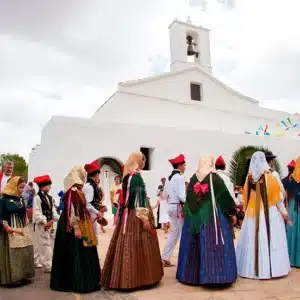

Long before visitors arrived looking for sun and leisure, Ibiza was a quiet Mediterranean island where daily life revolved around survival. The economy was simple, local and largely self-sufficient. Families depended on the land they cultivated, the animals they raised and the sea they fished. Money played a secondary role. What mattered was producing enough to eat and enduring a demanding environment with limited resources.
For centuries, Ibiza functioned almost independently from the outside world. Its geographical isolation, combined with poor transport connections, shaped a society that learned to rely on what it had. This way of life defined the island until well into the 20th century.
Agriculture as the centre of daily life
Farming was the foundation of Ibiza’s economy. Most of the population lived scattered across the countryside rather than in towns or villages. Each family occupied a farmhouse surrounded by small plots of land that had been adapted over generations.
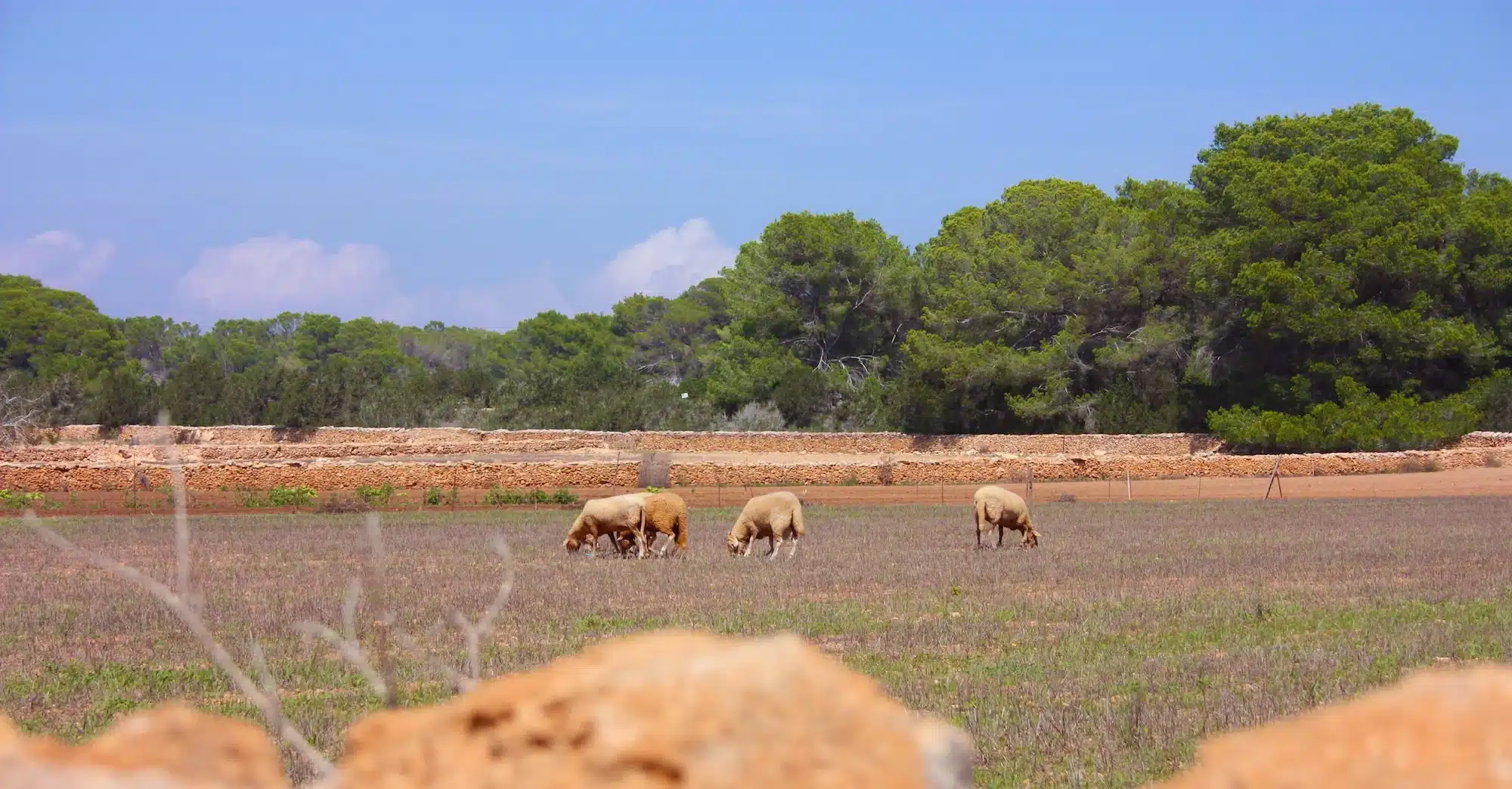
The terrain was shaped into terraces supported by stone walls, a practical solution to prevent erosion and retain water. Crops were chosen based on resilience rather than abundance. Wheat and barley were grown to make bread, a staple food. Almond, fig, olive and carob trees were common because they tolerated dry conditions and required little maintenance.
Vegetable gardens provided seasonal produce, while fruit was often dried to ensure food supplies during winter. Vineyards produced modest quantities of wine, consumed locally rather than traded.
This agricultural system was based on necessity. There was no intensive farming or commercial ambition. Families produced what they needed, shared tools and exchanged surplus goods. The rhythm of life followed the seasons, with planting, harvesting and maintenance dictating the calendar.
Livestock and food security
Animals were an essential complement to agriculture. Goats and sheep were valued for milk and cheese, pigs for meat, and chickens for eggs. Livestock provided protein in a diet that was otherwise heavily dependent on cereals and vegetables.
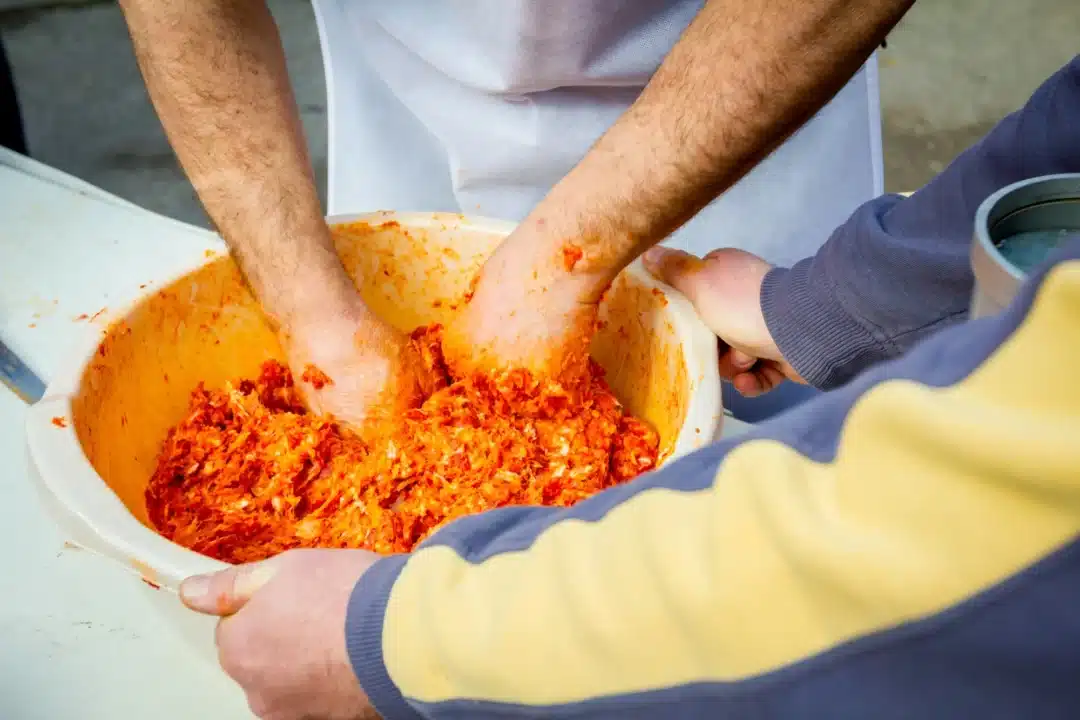
One of the most important events of the year was the pig slaughter. It ensured food for months and required careful preparation. Meat was preserved through curing and sausage-making, techniques developed out of necessity rather than culinary tradition. These practices allowed families to store food without refrigeration and survive periods of scarcity.
This reliance on livestock reinforced a culture of careful planning and resource management, where nothing was wasted and every part of the animal was used.
Fishing along the coast
For families living near the sea, fishing was another vital source of food and income. Fishing was carried out using small wooden boats, known as ‘llaüts’, and traditional methods suited to coastal waters. Knowledge of tides, seasons and weather conditions was crucial.
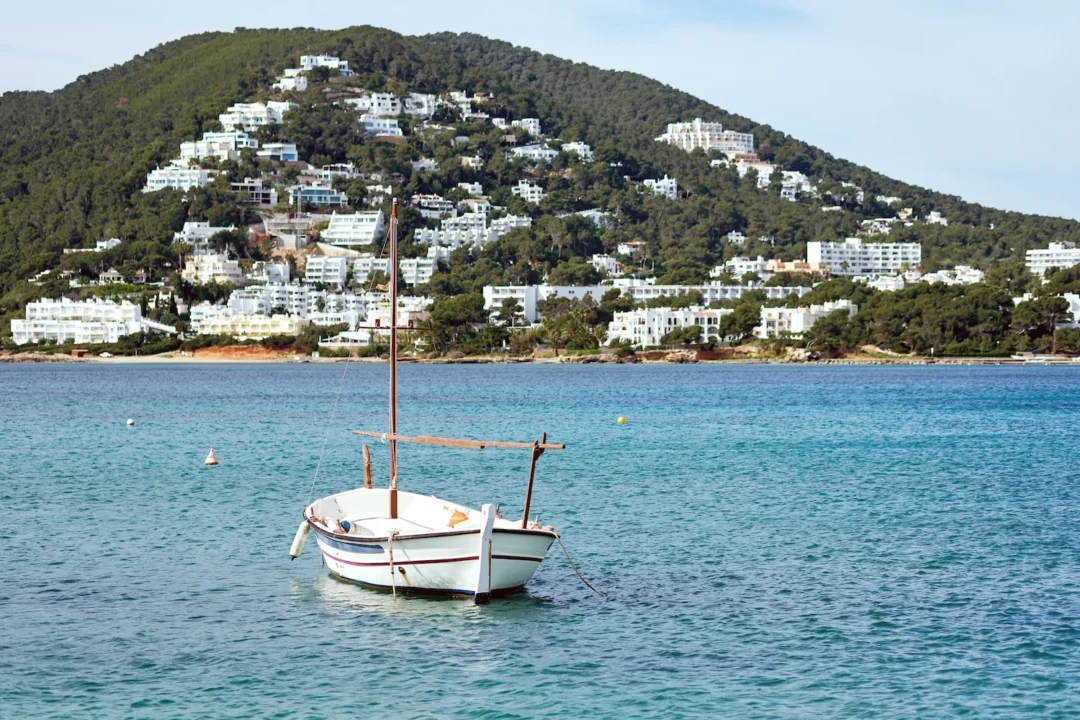
Catches were modest and unpredictable. Fish was consumed within the family or sold locally, rarely reaching markets beyond the island. There was no industrial fishing, and the sea was treated as a resource that needed to be respected to ensure future survival.
Fishing communities lived with uncertainty, dependent on conditions beyond their control. This reality fostered a strong sense of solidarity among fishermen and their families.
Salt production: a rare export economy
One of the few activities that connected Ibiza to wider trade networks was salt production. The salt flats of ses Salines had been exploited since ancient times and represented a rare opportunity for stable employment.
Salt was essential for preserving food and had high value across the Mediterranean. Its extraction and export brought external income to the island and required organised labour. Unlike agriculture and fishing, salt production created a link between Ibiza and international markets.
For centuries, this industry provided one of the island’s most reliable economic resources and shaped parts of its infrastructure and population distribution.
Crafts and manual trades
With limited access to imported goods, craftsmanship was a necessity. Ibizans produced what they needed using materials available on the island. Esparto grass was used to make baskets and ropes. Wood and stone were used to build houses, tools and furniture.
Clothing and footwear were handmade, often within the family. Jewellery and decorative items were reserved for special occasions and held symbolic value rather than commercial worth.
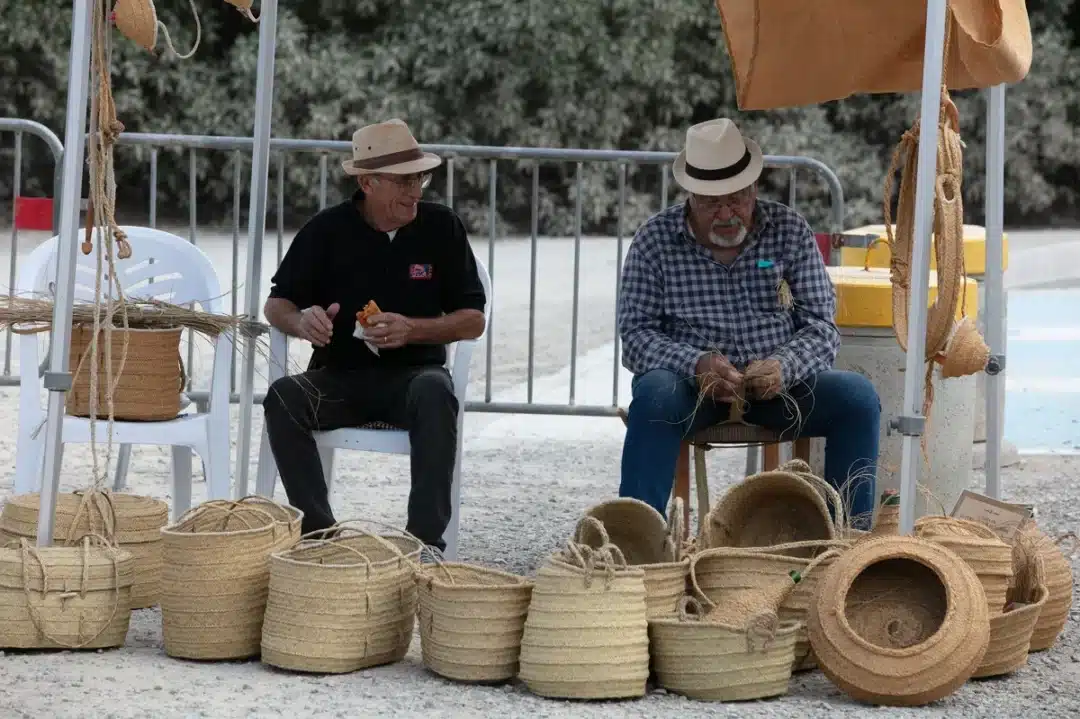
These skills were passed down through generations and formed part of everyday life. Crafts were practical responses to isolation and scarcity, not artistic expressions aimed at trade.
Isolation and emigration
Ibiza’s isolation shaped not only its economy but also its population movements. Opportunities were limited, and periods of hardship forced many Ibizans to seek work elsewhere. Temporary emigration to mainland Spain, North Africa or Latin America was common.
Money sent back home helped families survive and improve their living conditions. These movements created a society accustomed to absence, return and adaptation, reinforcing resilience as a defining trait.
A life defined by adaptation
Before tourism, Ibiza was not a place of abundance. It was an island where survival depended on adaptability, cooperation and deep knowledge of the environment. Every aspect of life was shaped by limited resources and the need to endure.
Understanding how people lived during this period offers valuable insight into Ibiza’s identity. The island’s landscape, traditions and social structures were not accidental. They were built through centuries of effort, necessity and quiet determination.
For those curious about Ibiza’s past, this history reveals an island shaped long before it became a destination, by people who lived closely connected to land, sea and community.