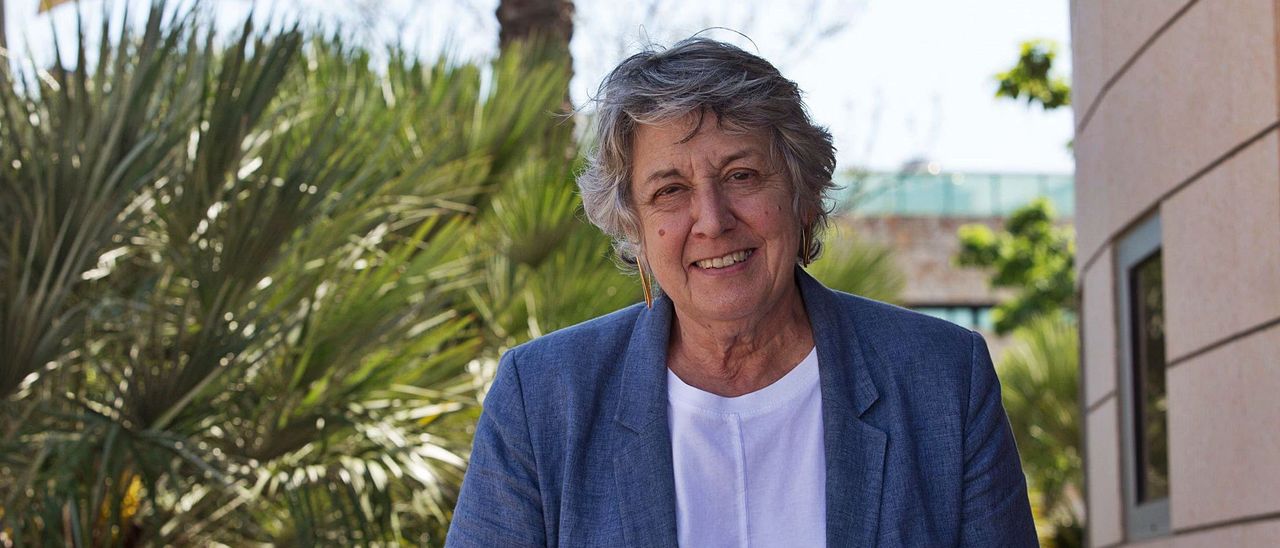
In December 2016 Rosa María Alberdi became the first Spanish nurse to be named an honorary doctorate by the University of Murcia. She came to nursing while studying Psychology and it became a passion she could not leave. Alberdi, dean of the Faculty of Nursing and Physiotherapy of the UIB, visited Ibiza on Friday to participate in a round table organized by the College of Nursing of the Balearic Islands at the Club Diario de Ibiza, as part of World Nursing Day celebrations. You are the first Spanish nurse to receive an honorary doctorate. It’s been a long wait for this, hasn’t it? Yes, I think it has to do with the recognition and importance given to the work of nurses. We had several foreign nurses and I was the only Spanish. When they gave it to me, I said that we had all carved a path to the doctorate, a path towards normalization. It is normal that there are Spanish nurses with honorary doctorates, the abnormal thing is that there were none and that now, I am the only one. Universities should reflect on this. Why do you think this is the case? Look, I’m reading ‘Infinity in a reed’, by Irene Vallejo, a wonderful book. She speaks of customs, of Herodotus, and says that there is nothing stronger than customs. Plus, everyone thinks that theirs are the best. Two things happen to us. The first is that we Spanish nurses come from the unreformed part of the Council of Trent. In the reformed part, care is abandoned, there is a dark stage, while in the Catholic part, which is not reformed, we have the help of the nuns, who continue to care, as they have always done. The good thing about this is that you have that flow of energy, but the bad thing is that vocation is confused with submission. A nurse must be interested in what she does, a vocation, but it should not be confused with a vocation of a religious nature. That has weighed down on us. She spoke of two things. What was the second? Well, it is a deeply feminized profession, with more than 80% women, and we reproduce female gender stereotypes. This makes it difficult for us to speak naturally in decision-making areas. With covid it has been clearly realised that nurses are irreplaceable, indispensable. But if you stop to think about what we have done differently, the answer is actually nothing. We have done the usual, but in extraordinary circumstances of risk, insecurity and danger. And with uncertainty. The extraordinary work of nurses has been noticed.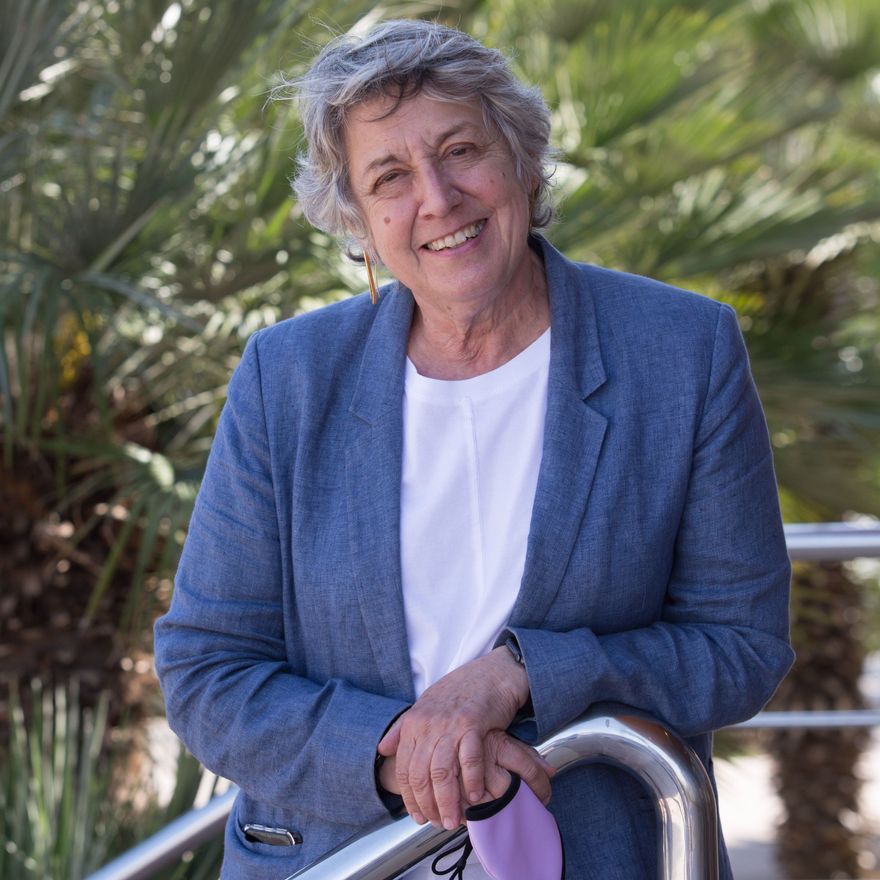 Rosa María Alberdi, on Friday, at the door of the Club Diario. Vicent Marí. More nurses are needed. Yes, there is a huge shortage of nurses that related to the low value we assign them in our country, with the precariousness of jobs and, above all, with the terrible policy of cutbacks that took place in 2012. Nurses contribute something essential, the accompaniment in any circumstance of life. Doctors fight against death, they are very important, they revolve around pathology. We focus on life. It is an indispensable profession, but care is linked to the feminine. In your case, was it psychology or nursing first? I am a very strange nurse. I came on the rebound. I was studying Psychology and I realized that the degree lacked a lot of content in physiology, anatomy … Knowledge of the human body. So I combined ATS, was it was known before, with Psychology. I finished both at the same time, I found a job as a nurse right away and I came across the concept of care, looking others with a special interest, caring for them as they would if they could, and it became part of my life. I discovered a passion. And I’m still passionate. Psychology and nursing, does one feed the other? Yes, I think that people look at the world very much influenced by what we have studied, by what we do. I studied Psychology because I had a desire to collaborate with others, to help, and nursing filled that desire even more. They have never quarreled or got on each other’s nerves. They complement each other. In fact, I imagine that psychology is a large part of a nurses day to day work. Nurses have studied psychology during their degree. We try to train them to take care of a person in all areas. An illness does not define a person, perhaps it limits them, makes them feel lonely, makes them suffer … But it does not define them. Illness is a part of it, not everything. Ours is a very complex profession that needs a lot of thought. It is clear that you have to know many techniques and medications to control patient safety, but above all you must have a caring approach that makes you understand that the needs of a specific person, which are general, are configured in a certain way in that person. If you only revolve around the disease, you don’t see that. It is evident that you do not treat a 47-year-old person weighing 50 kilos the same as a 70-year-old who weighs 90. This is also known by doctors, but their focus is elsewhere.
“Doctors revolve around pathology, we nurses, about life”

You are a professor at the UIB, what is it that most want your students to learn? That they demonstrate their competence in trying to understand how they can serve a given person. This is easy to say and difficult to do. There are aids and methods to quit smoking, for example, but it is not that simple. Look, we were recently talking about a woman who needs oxygen and who smokes. Faced with this situation, her doctor gets angry. Her nurse considers getting her to stop smoking along with the oxygen. Then we will see. If she can’t quit smoking, let her do it, but safely. And you have to think about why she smokes even though she’s choking. Is all this learned or does it have to come as a matter of course? Students come to the faculty because they are interested in helping. Vocation. Although this word is a bit reviled, I defend it. It costs a lot to get into Nursing, you have to have that extra something. It is not that they choose Nursing because they cannot study Medicine, as was said in the past. Exactly. They do not come bouncing over from other degrees. And it is a very demanding degree. When someone tries to study nursing while working at the same time, I always tell them that they can’t do it because of how demanding it is. The students come to us with a little flame and it is our job to turn it into an ember, so that it does not go out. And that it does not become a bonfire, so they do not end up burned, I suppose. Nurses burn out because the working conditions are horrible. Precariousness, constantly changing workplace. To make a care plan you must have time to get to know that person, you cannot spend a week here and another on the other side of the island. It makes it impossible to follow up or have a serious plan. This precariousness really does a lot of damage and we have to fight it. If people do not work in the best possible conditions, they cannot do their job well.