Sitting down for a local meal in Ibiza is not just about eating. It is about following an order, sharing dishes and understanding how flavours build slowly from one course to the next. Traditional Ibizan meals are designed to be enjoyed without rushing, with each plate playing a specific role. For visitors, knowing what comes first, what follows and how the meal ends helps make sense of the experience and avoids treating each dish in isolation.
This is a guide to a local meal explained from first dish to dessert, following a classic structure that you will still find in homes, traditional restaurants and local celebrations across the island.
The table starts with sharing
Before individual plates arrive, a local meal usually begins with shared starters placed in the centre of the table. This first part of the meal sets the rhythm: informal, social and meant to be enjoyed slowly.
Ensalada payesa
Ensalada payesa is one of the most recognisable Ibizan starters. It is a rustic salad made with dried fish, potatoes, tomatoes, onions and peppers, dressed with olive oil. The flavours are strong but balanced, combining sea and land in a very direct way.
This dish prepares the palate for what is to come. It is not light in the modern sense, but it is honest and filling, and it reflects the island’s traditional relationship with preserved fish and seasonal vegetables.
Coca de pebres
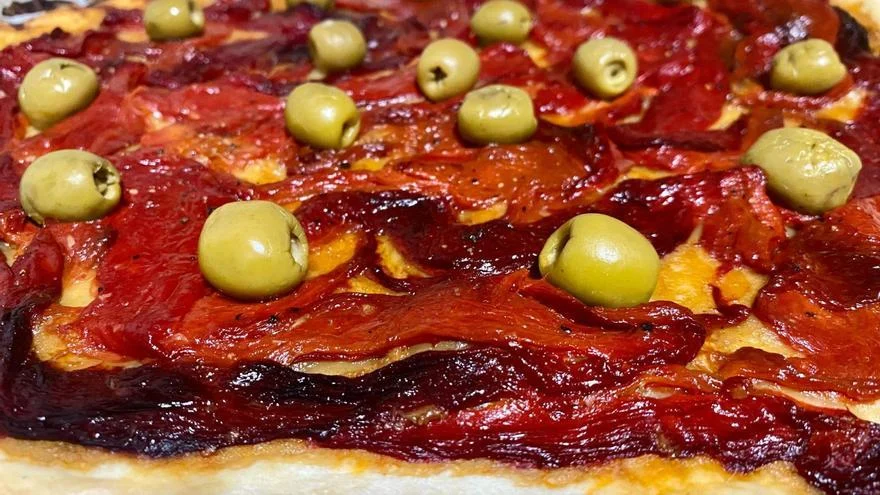
Coca de pebres is a flatbread topped with roasted peppers and onions, sometimes enriched with other vegetables. It is usually served cut into pieces, making it ideal for sharing.
Warm, soft and slightly sweet, coca de pebres adds texture to the table and works as a bridge between the salad and the fried dishes that often follow.
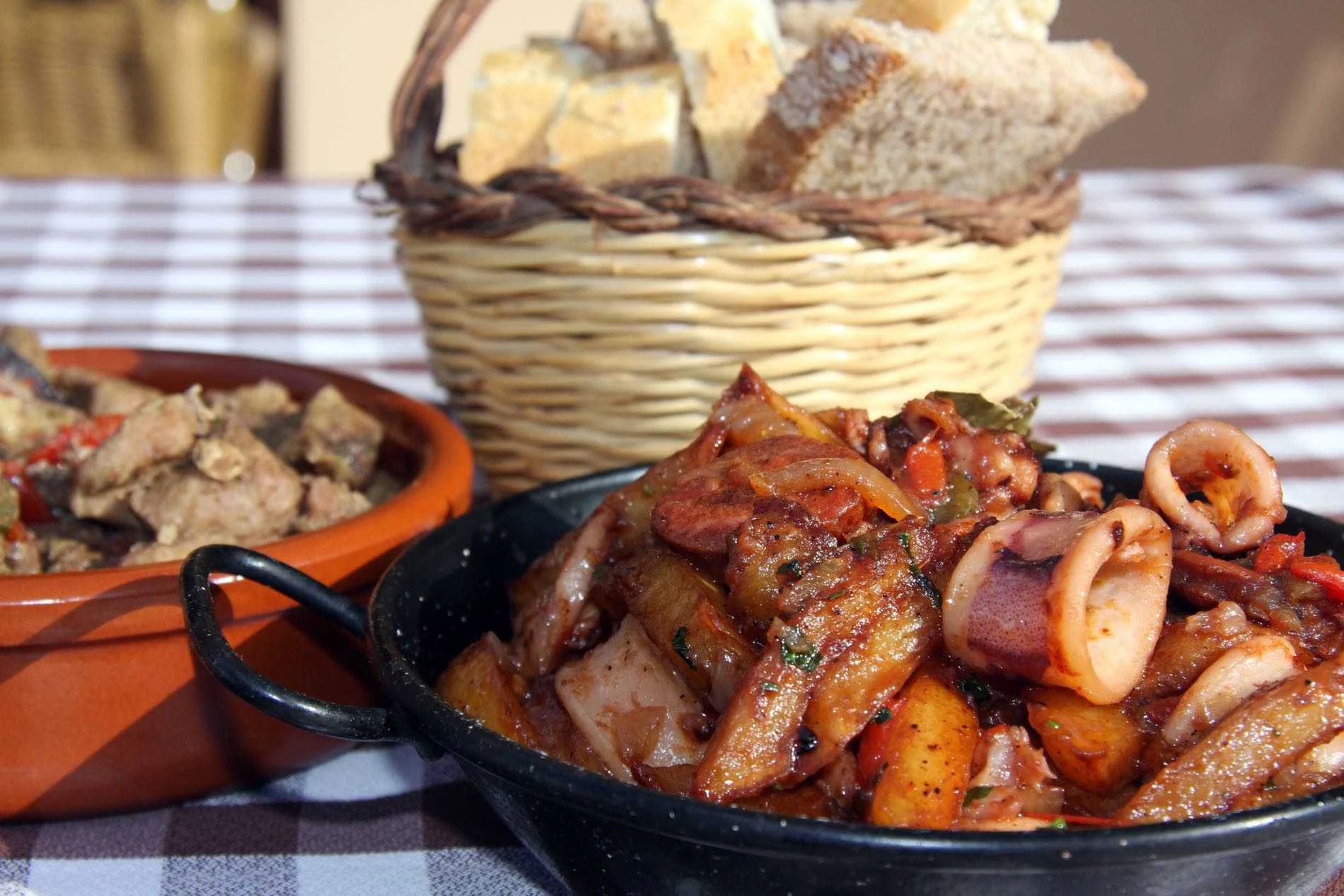
Frita de calamar
Frita de calamar is a classic Ibizan dish made with squid, potatoes and peppers, all cut into small pieces and fried together. It is served hot and is usually one of the most popular starters at the table.
This dish introduces a deeper, more intense flavour and brings warmth and richness to the meal. It is filling, which is why portions are often shared rather than served individually.
Bread with alioli
No local meal is complete without bread and alioli. The bread is used throughout the meal, while the alioli — made with garlic and olive oil — adds strength and character.
Alioli is not meant to dominate the plate. It is used sparingly, enhancing flavours rather than covering them, and it remains on the table until the end of the meal.
The main event: bullit de peix
After the starters are cleared, the main course arrives, and in a traditional Ibizan meal this is often bullit de peix. This dish is served in two parts and should always be understood as a single experience.
First comes the fish, cooked in a light broth with potatoes. The fish varies depending on availability but is always fresh and served simply. It is usually eaten with a spoonful of alioli, which adds depth without overpowering the natural flavour.
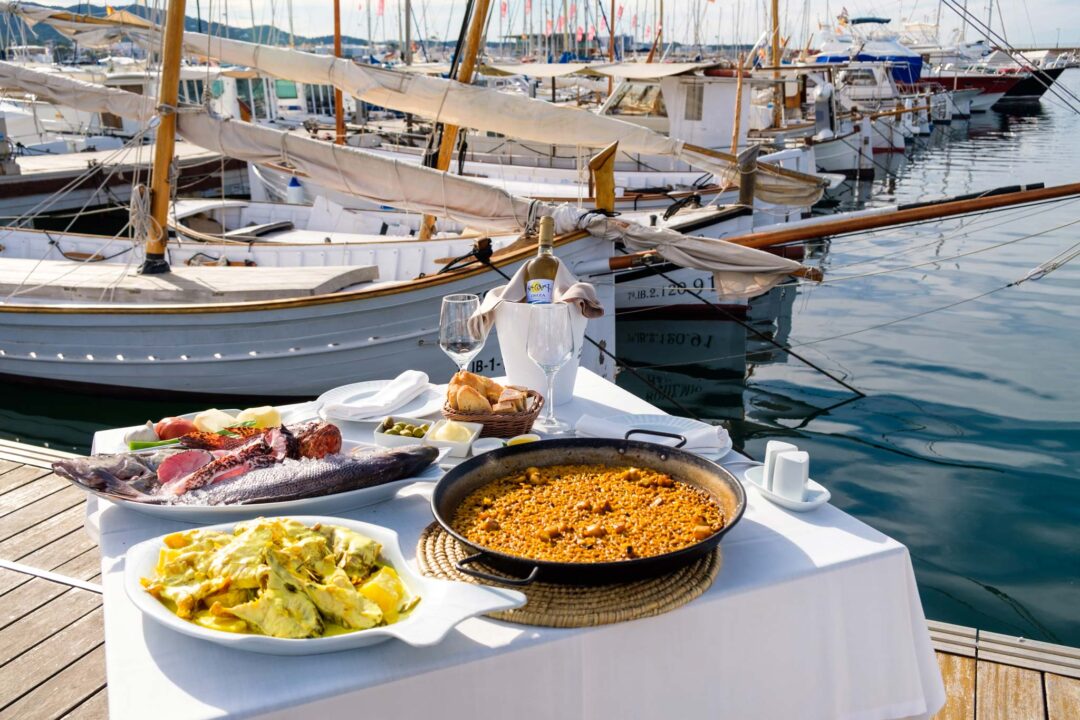
Once the fish has been eaten, the second part follows: the rice. The rice is cooked using the same broth, absorbing all the flavour from the fish. This order is essential. The rice is not a side dish, but the natural conclusion of the main course.
Bullit de peix is filling, comforting and meant to be eaten slowly. It is the centre of the meal and often the reason people gather around the table in the first place.
Dessert: simple and familiar
After a main course like bullit de peix, desserts are usually traditional and straightforward.
Flaó or greixonera
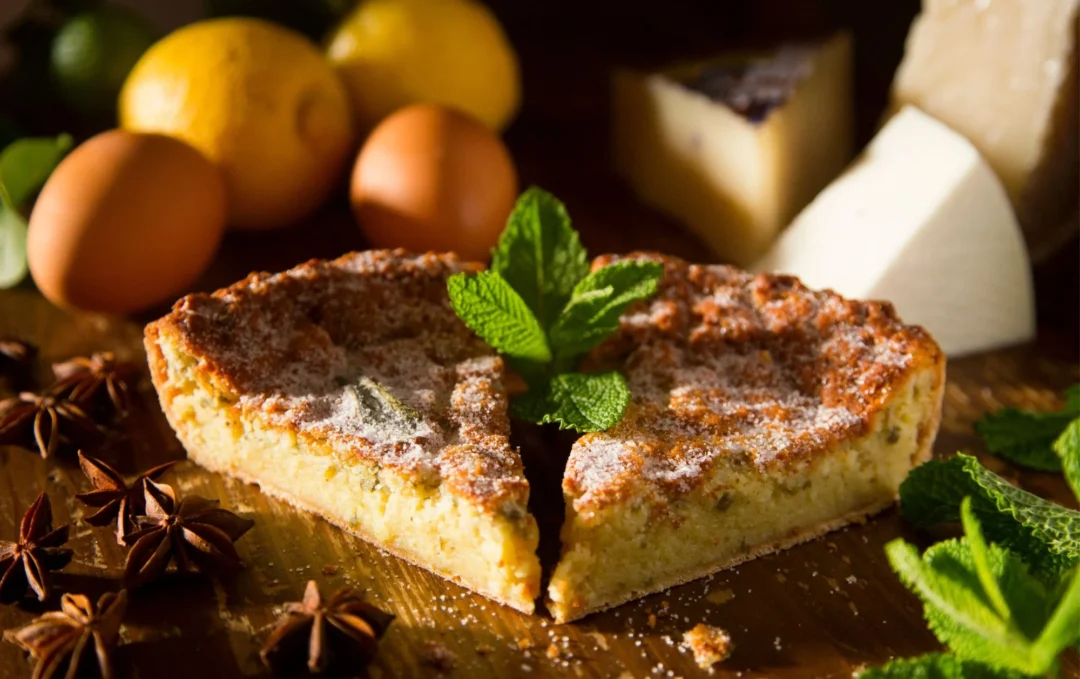
Flaó is one of Ibiza’s most distinctive desserts. It is a baked cheesecake made with fresh sheep’s or goat’s cheese, eggs, sugar and mint, which gives it a slightly herbal, fresh flavour. Dense but balanced, it is closely linked to local celebrations and traditional meals.
Greixonera is another classic option. Made with leftover ensaimadas, milk, eggs, sugar and cinnamon, it has a softer texture and a warmer, more comforting flavour.
Both desserts are typically homemade-style and served in modest portions, designed to round off the meal without feeling heavy.
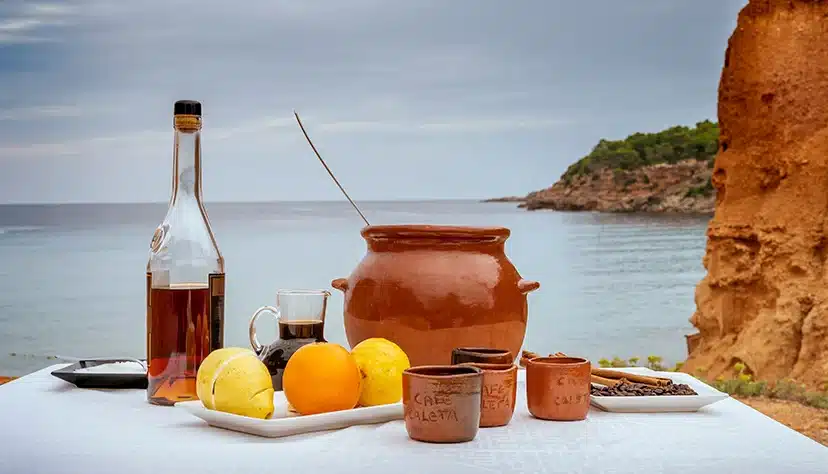
Café caleta
Dessert is often followed by café caleta, a coffee prepared with brandy, rum, lemon peel, cinnamon and sugar. It is gently heated before serving, which gives it a warm, spiced aroma.
Café caleta is not rushed. It is part of the conversation that continues after plates are cleared and marks the transition from eating to lingering at the table.
The final touch: hierbas ibicencas
Many local meals end with a small glass of hierbas ibicencas. This herbal liqueur is made with local plants and can be served dry or sweet, depending on preference.
Hierbas is not considered excess, but tradition. It closes the meal, aids digestion and signals that there is no need to rush away from the table.
More than food: a structure to follow in a traditional Ibizan meal
Understanding a local meal in Ibiza means understanding its order. Starters are shared, the main course unfolds in stages, dessert is familiar and the meal ends with coffee and herbs.
For visitors, following this structure helps appreciate Ibizan cuisine as it is meant to be enjoyed: slowly, socially and with respect for tradition.
If you want to experience Ibiza through its food, try ordering a full local meal and follow it from the first dish to the final glass. It is one of the clearest ways to understand the island’s culinary culture.