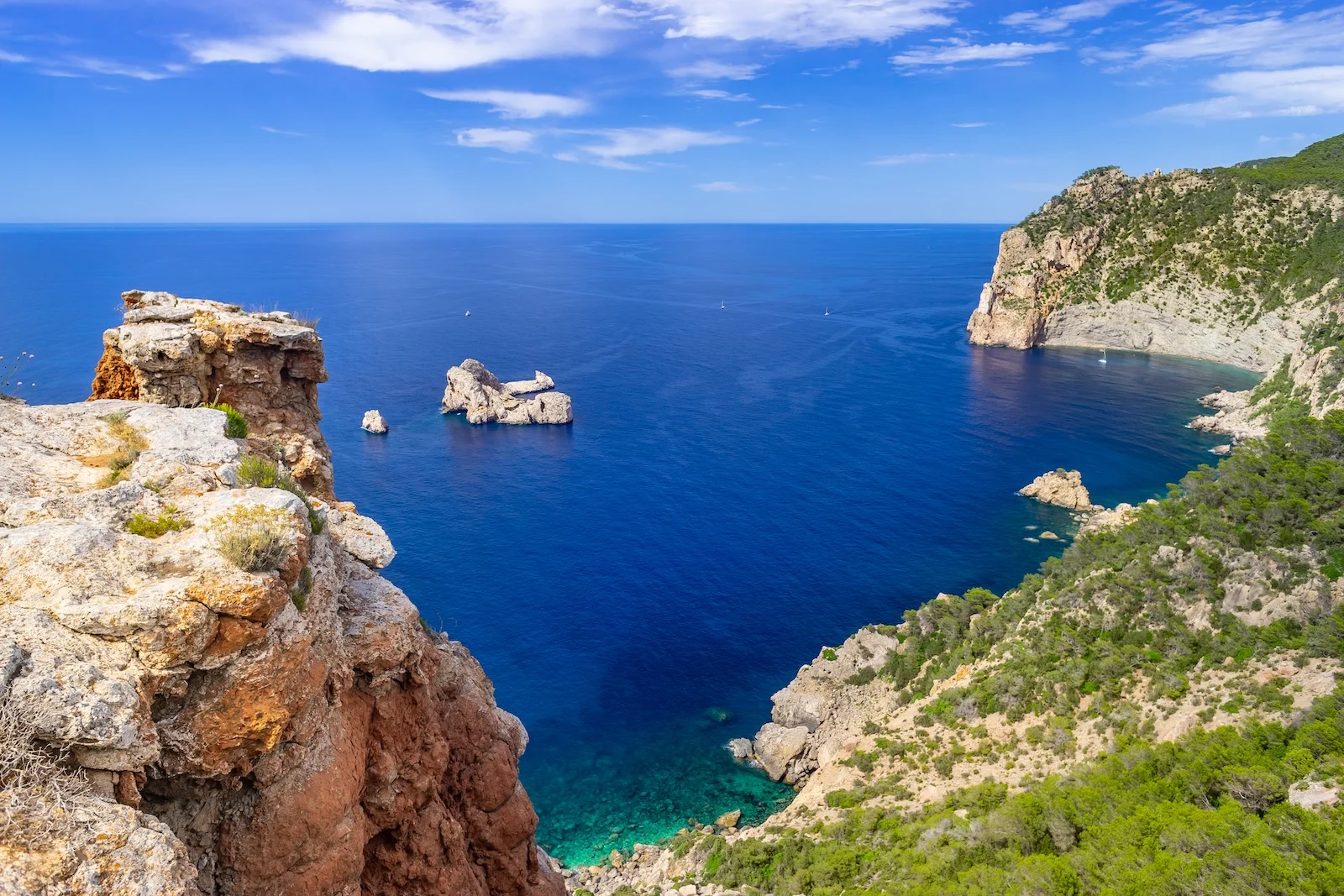

Long before Ibiza became a Mediterranean destination shaped by tourism, the island was already part of an extensive network of trade, navigation and cultural exchange. The place where this story begins is Sa Caleta, a discreet archaeological enclave on the south-west coast that marks the arrival of the Phoenicians to the island more than 2,700 years ago. Together with its interpretation centre, this site offers one of the clearest and most grounded insights into Ibiza’s earliest chapter.
Far from monumental ruins or grand reconstructions, the value of Sa Caleta lies in its context. It is a place to understand how and why Ibiza entered history, and how the island’s strategic position in the Mediterranean shaped everything that came afterwards.
A Phoenician foothold in the western Mediterranean
The settlement at Sa Caleta was founded around the 8th century BC, making it the oldest documented settlement on the island. Phoenician sailors and traders, originating from the eastern Mediterranean, chose this coastal area as their first base in Ibiza, establishing a stable community that would operate for roughly two centuries.
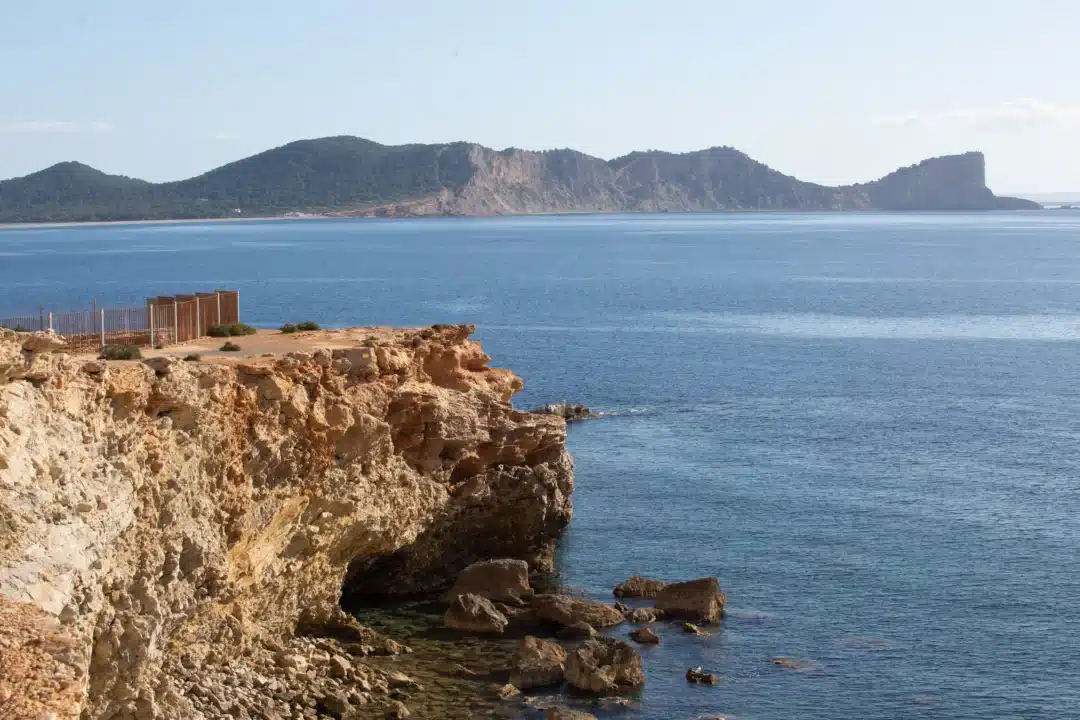
This was not a random choice. The surrounding coastline offered sheltered anchorage, access to maritime routes and a landscape suitable for early settlement. Ibiza, at that time, was a strategic stop within a much wider trading system that connected the eastern Mediterranean with the Iberian Peninsula and beyond.
Why this location mattered
The importance of Sa Caleta is closely linked to geography. Its position allowed easy access by sea while remaining protected from direct exposure. The nearby coastline provided resources, and the surrounding terrain offered a degree of natural defence. For the Phoenicians, whose economy depended on trade, logistics and mobility, these factors were decisive.
From here, goods, people and ideas circulated. Archaeological evidence shows a community that was not isolated, but fully integrated into Mediterranean exchange networks. Ceramics, tools and imported materials found during excavations confirm that this was a functioning settlement with economic and social structure, not a temporary outpost.
Daily life in the settlement
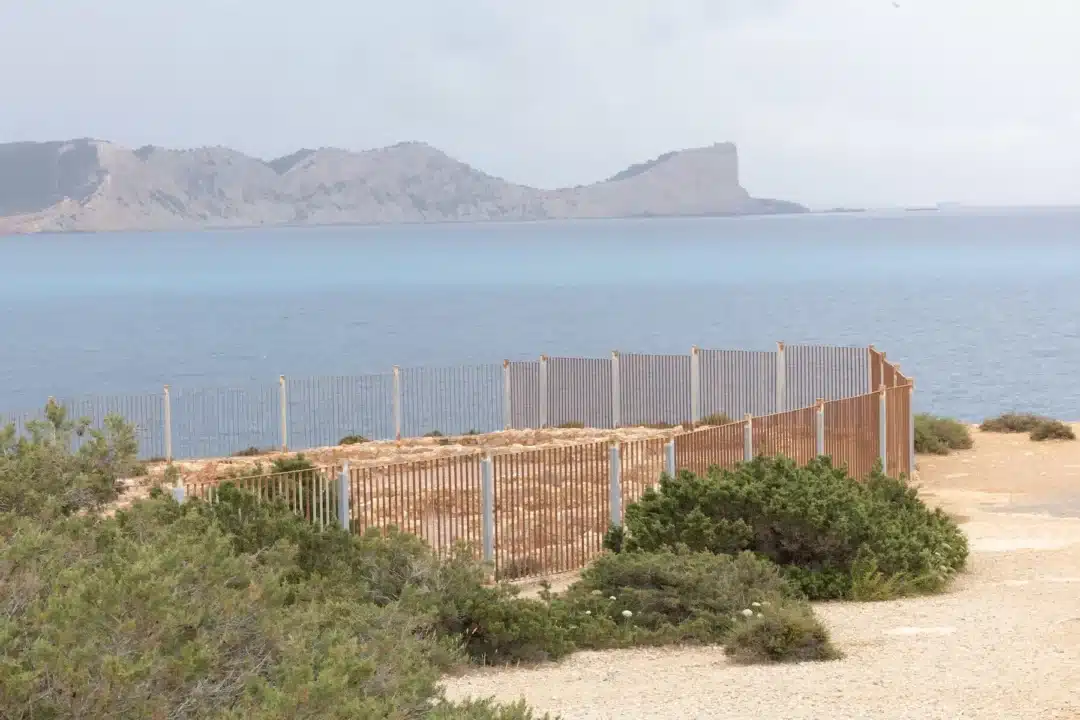
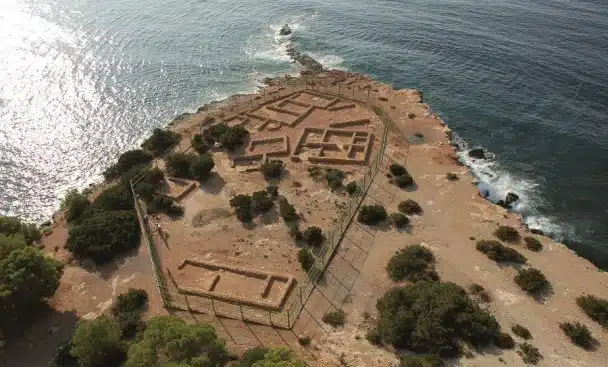
Excavations carried out at the site have revealed the remains of a compact urban layout. Rectangular houses built with stone foundations and mudbrick walls were arranged along narrow streets and shared spaces. Storage areas and work zones suggest a community organised around both domestic life and small-scale production.
Although the visible remains today are modest, they provide enough information to understand how the settlement functioned. Around the 6th century BC, the population gradually relocated northwards to a more advantageous bay, where the city of Ebusus — present-day Ibiza Town — would later develop. Sa Caleta was abandoned, but its role as the island’s point of origin remained fundamental.
A recognised site of universal value
The historical importance of Sa Caleta has been formally recognised as part of the UNESCO World Heritage listing Ibiza, Biodiversity and Culture, granted in 1999. This designation highlights the relevance of the Phoenician settlement within the broader context of Mediterranean colonisation, alongside other key elements such as Dalt Vila walls and the island’s natural ecosystems.
This recognition places Sa Caleta among the most significant archaeological sites in the Balearic Islands, despite its discreet appearance.
Visiting the site today
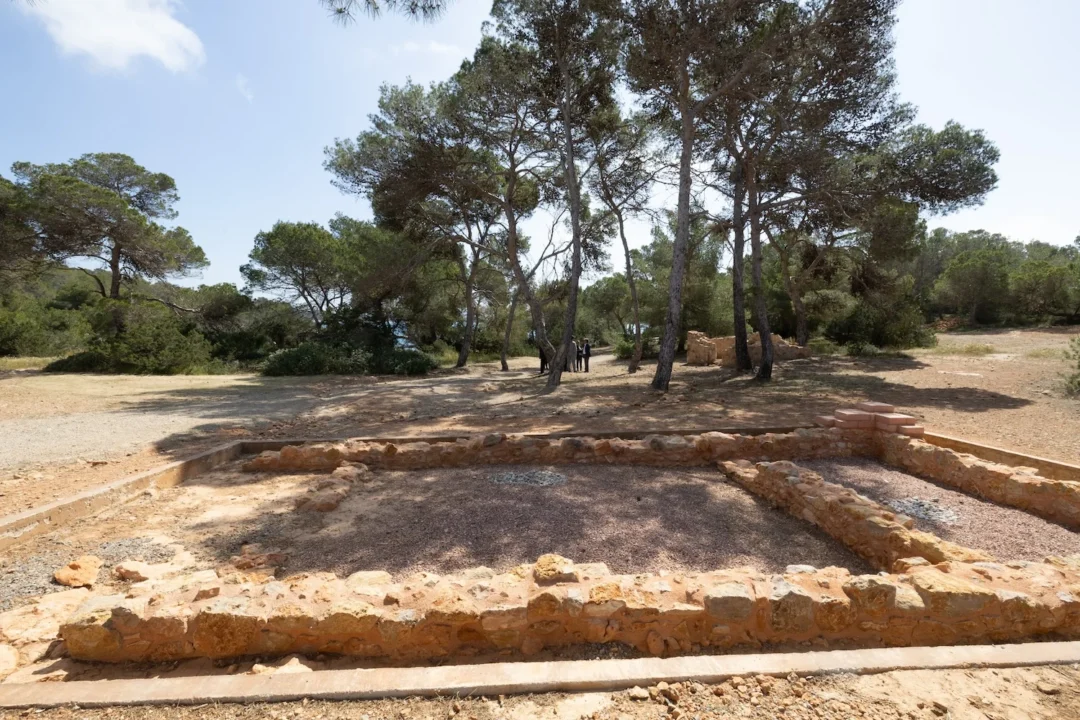
Today, the settlement can be visited as an open-air archaeological space. Access is free, and the setting remains largely untouched, allowing visitors to move through the remains at their own pace. Information panels help explain the layout and history, although the structures themselves are low and fragmentary.
What makes the visit especially valuable is its location. The proximity to the coast and the surrounding natural landscape give a sense of why this place was chosen in the first place. It is a quiet visit, far removed from the island’s busier cultural landmarks.
The Centro de Interpretación de Sa Caleta
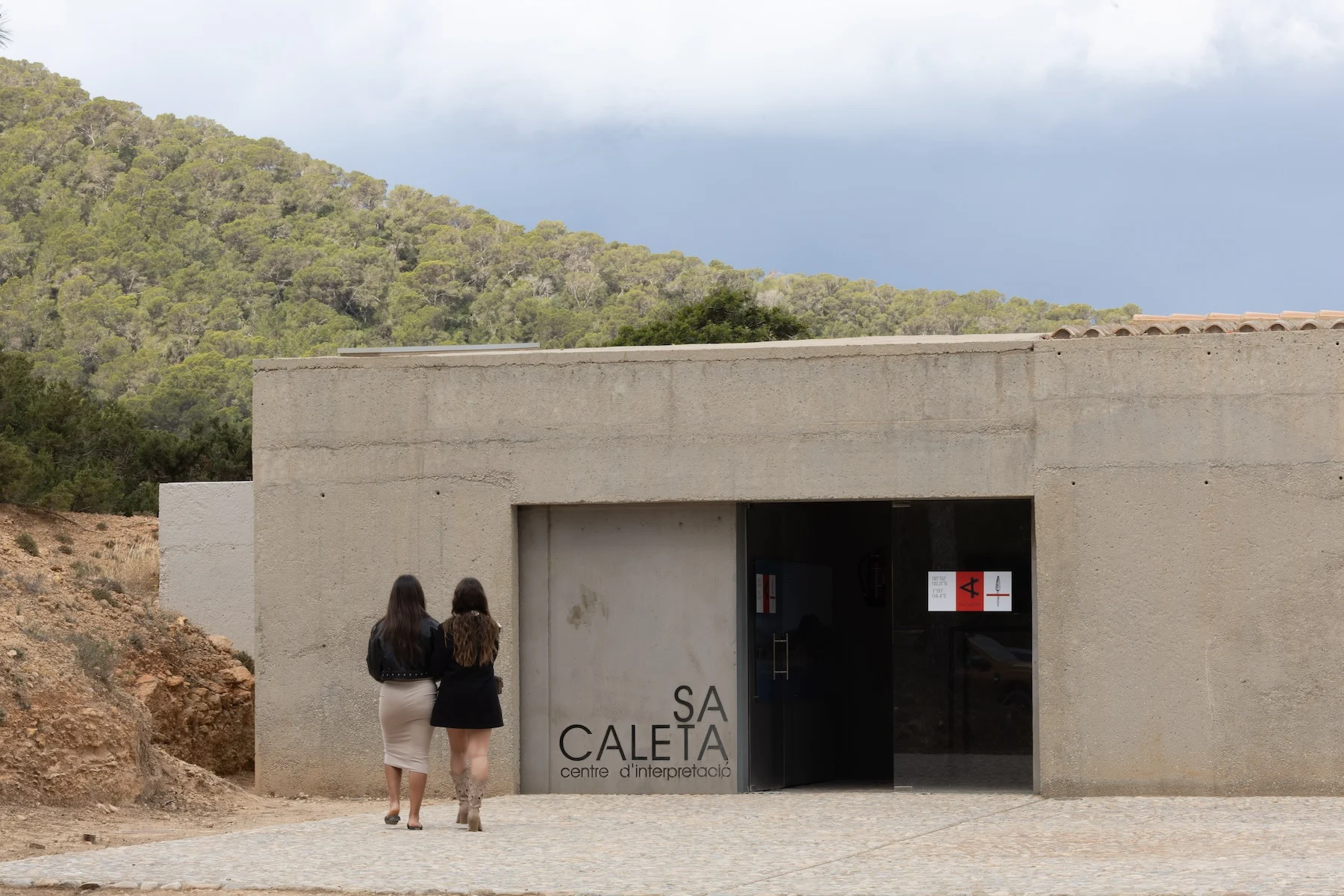
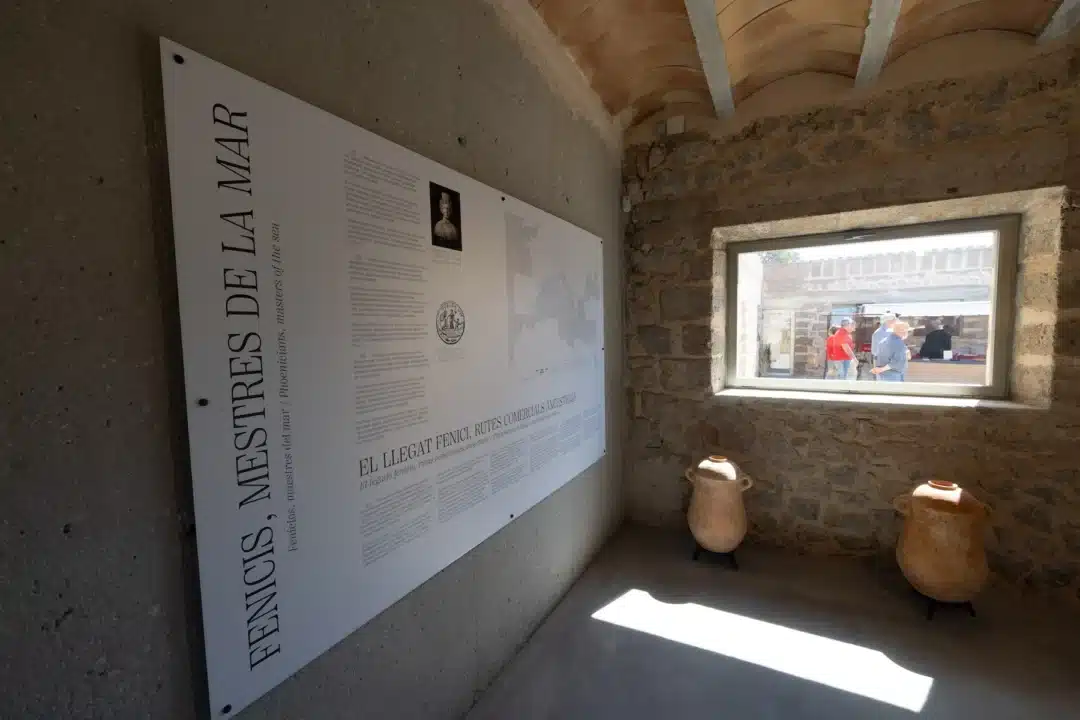
To fully understand the significance of the site, a visit to the nearby Centro de Interpretación de Sa Caleta is strongly recommended. The centre was created to provide historical and archaeological context, helping visitors understand what they see on the ground.
Inside, the exhibition explains who the Phoenicians were, how their trading networks functioned and why Ibiza became part of that world. Maps, diagrams and explanatory panels reconstruct the settlement and connect it to the later development of Ibiza Town.
The centre does not overwhelm with information. Instead, it offers clear and accessible explanations that make the visit more meaningful, particularly for those unfamiliar with ancient history or archaeology.
A visit that completes the picture
Seen together, the archaeological remains and the interpretation centre form a coherent cultural experience. The centre provides the narrative, while the site itself offers the physical connection to the past. This combination allows visitors to visualise the settlement, understand its function and place it within the broader history of the island.
The visit can easily be combined with time at the nearby beach, creating a balanced experience that brings together history, landscape and a slower pace.
Why Sa Caleta still matters
Sa Caleta is not a place of spectacle. Its importance lies in what it represents: the starting point of Ibiza’s recorded history and the first link between the island and the wider Mediterranean world. Understanding this site helps explain Ibiza’s long-standing role as a crossroads of cultures, trade and movement.
For those interested in discovering a different side of the island, one rooted in archaeology and historical context, Sa Caleta offers a quiet but essential insight into how Ibiza began.